
This is an indirect retrospective to what will introduce the next chapter of a series of short essays on how watch cases challenge the notion of form and deconstruct the space. Not directly related to the topic but relevant on the design elements have been chose to pursue an idea.
Cartier Pasha ref 2388 – Year 2000.
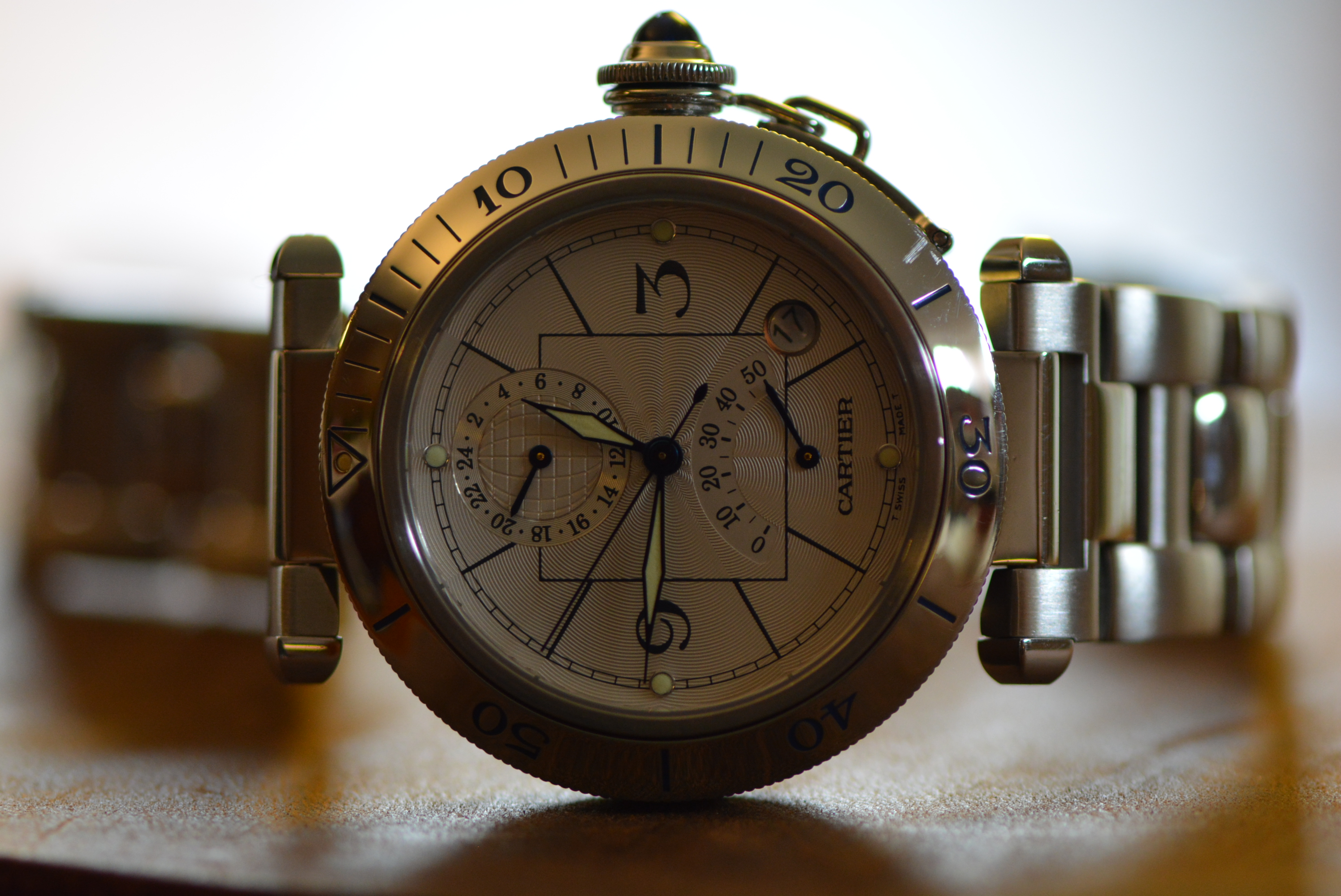
Cartier Pasha ref 2388 – Year 2000, Automatic, Guilloche dial, GMT, power reserve, date, unidirectional bezel. D 38mm H 10.5mm Cal. Girard Perregaux 3100. Steel case & glass case back.
Among the endless Cartier designs, I can say this one distinguishes itself for its unique aesthetic. Generally solely attributed to the genius mind of Gerald Genta, in reality the actual design of the modern Pasha had been only a revisited and cleaned version by Genta of the past model. While we find written records of the order of a “ Cartier Pasha” as far back as 1930, indeed commissioned for the El Glaoui Pasha of Marrakech, it is presumed this “original” Cartier Pasha used to be most likely a Tank provided with an already patented screwed crown, uniquely made to allows the watch withstanding a swim pool use. This is from where the legend came from, and the name. It is possible, instead, that the modern Pasha we are used to see today is derived from a later model that Cartier itself produced, dating back to 1943 with the reference 8537. Such model, in gold, already has all the characteristic features of the modern Pasha, such as round case, protective grid, central square “chemin de fer”, arabic number 3-6-9-12, screw crown with cabochon, vendome lugs with top square screws.
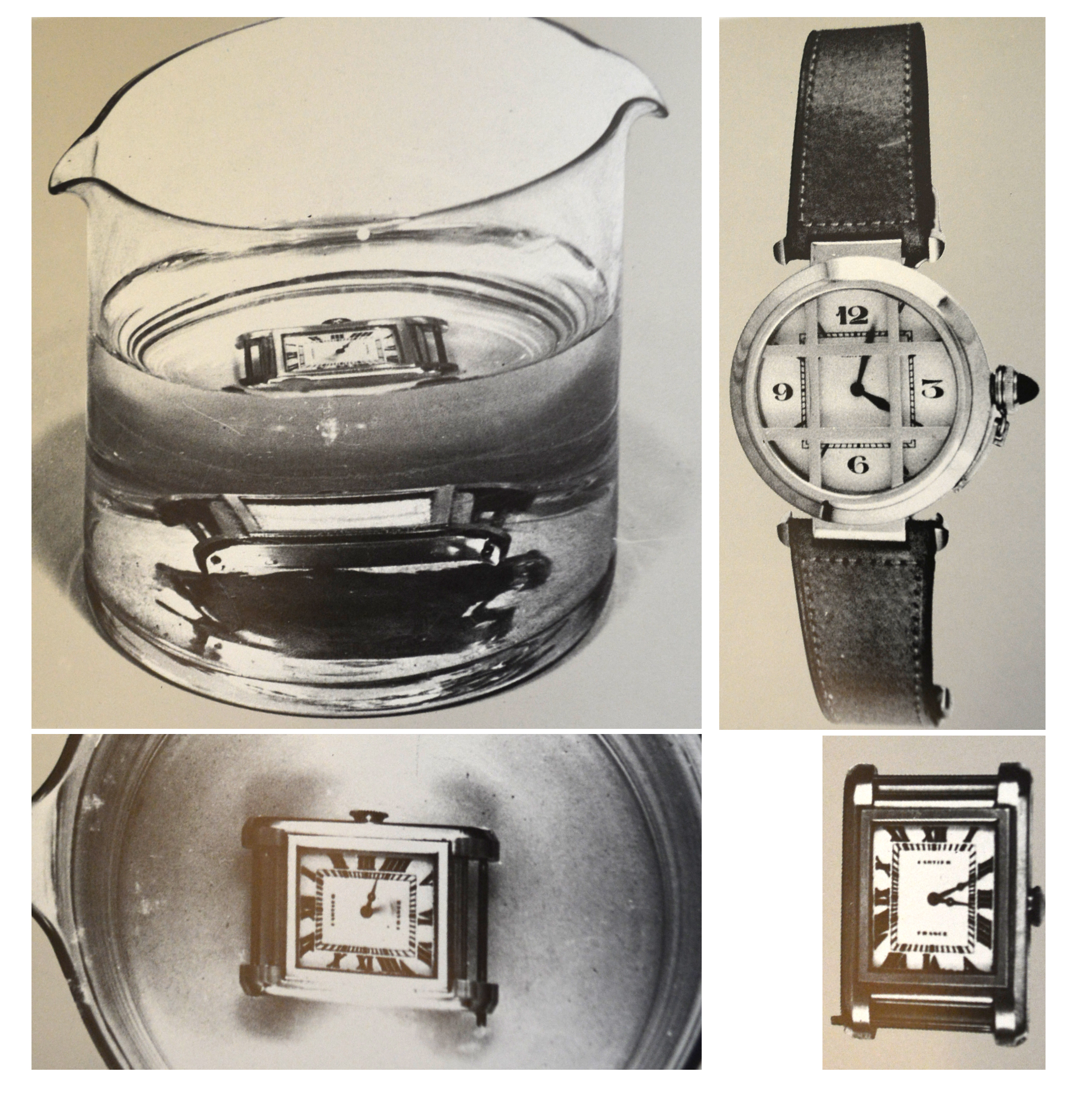
Gerald Genta is presumed to have worked on exacerbating such a prior strong design concept. Likely trying to enforce its aesthetics, he did add thinly printed marks’ hours in an outer ring connected to an inner square shape, making evident the contrast between the circular case and the stylized square reminiscent of the original “chemin de fer”.
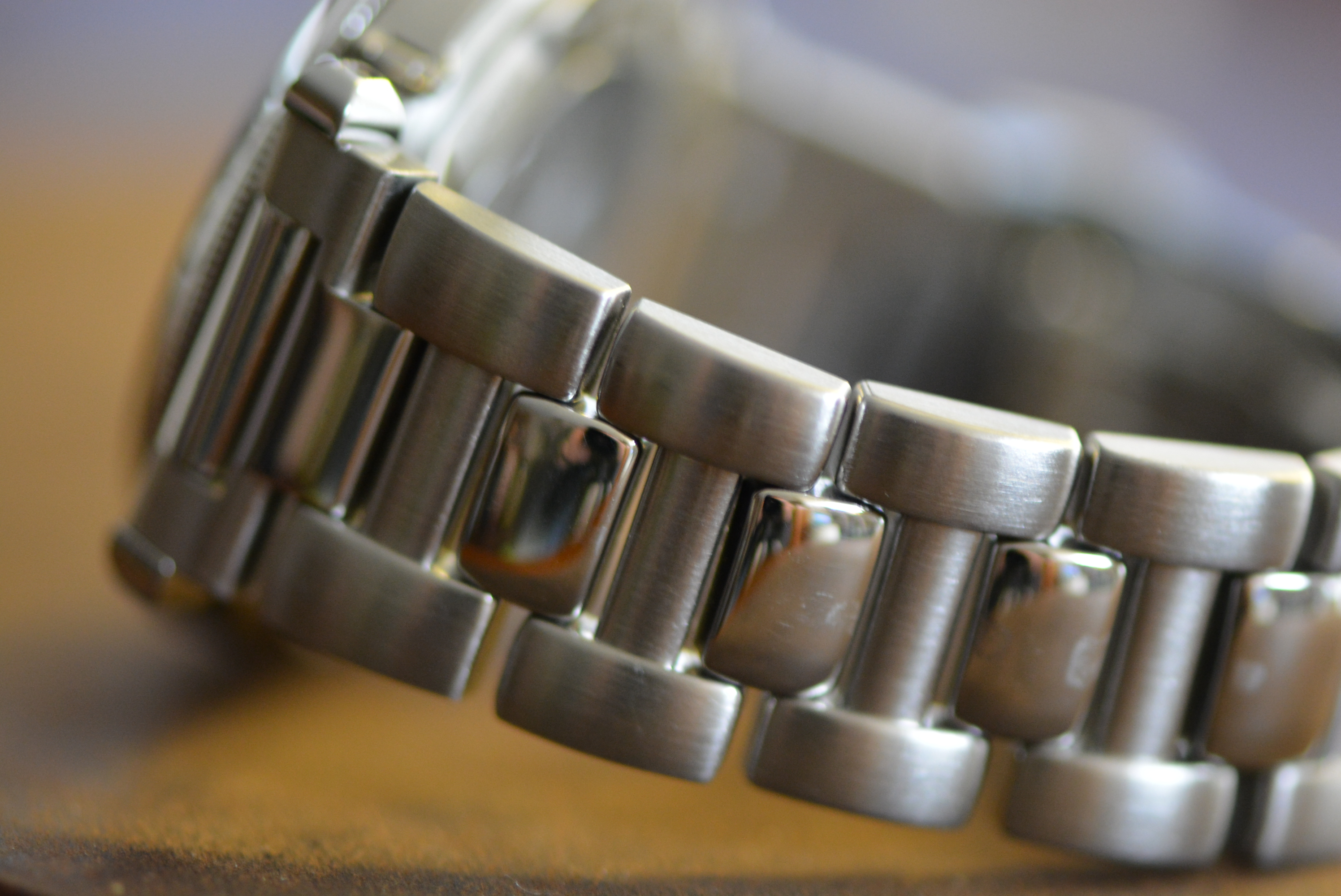
The watch achieves a more modern style with the insert of an unidirectional rotating bezel with a simple and clean layout using Breguet numbers. To complete the bezel a lumed top triangle orients the case and the bezel. I would assume he worked also in the configuration of the bracelet, especially the link geometry and “textile” tactility of the framework. From an evident textile reminiscence in the earlier model of 1985, to a later more masculine rounded C-section link structure, the bracelet represent for Genta a completion of the idea of the watch. Never by random choice or trivial, tha bracelet is again a design choice the serve with humility to strengthen the relation of the dial to the wrist.
Models appeared in 1985 manage also to extend the availability of complication presented, introducing variations that incorporate perpetual calendar, moon phase, date, chronograph and even some special model with stroke counter, so dear to golfs’ players. Of such model we will talk about in the next essay, deserving a treat of its own.
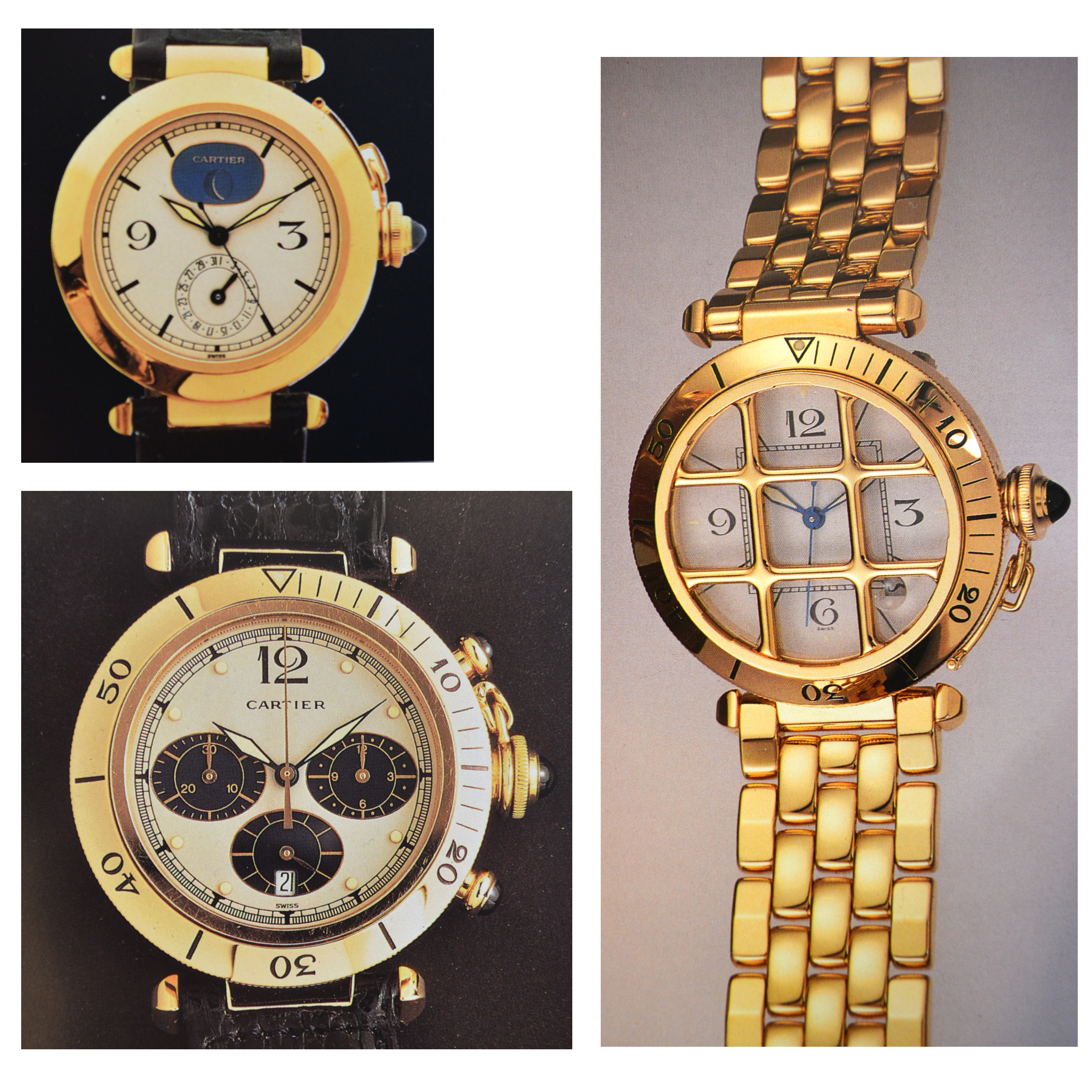
The design of those years made by Genta, even he alone is not the sole inventor of the overall design layout, it is spectacular. Its approach to such a difficult task to remodel such a strong dated shape. If it seems minimal its intervention, instead at a closer look it is well thought and conservative. It is somehow groundbreaking, introducing an all new level for such watches. Interesting aspects we found always in Genta’s hand are for example the placement of the moon phase sub dial, always on top of the main dial layout. Because the moon over raign our heads, it has to do the same in a watch.
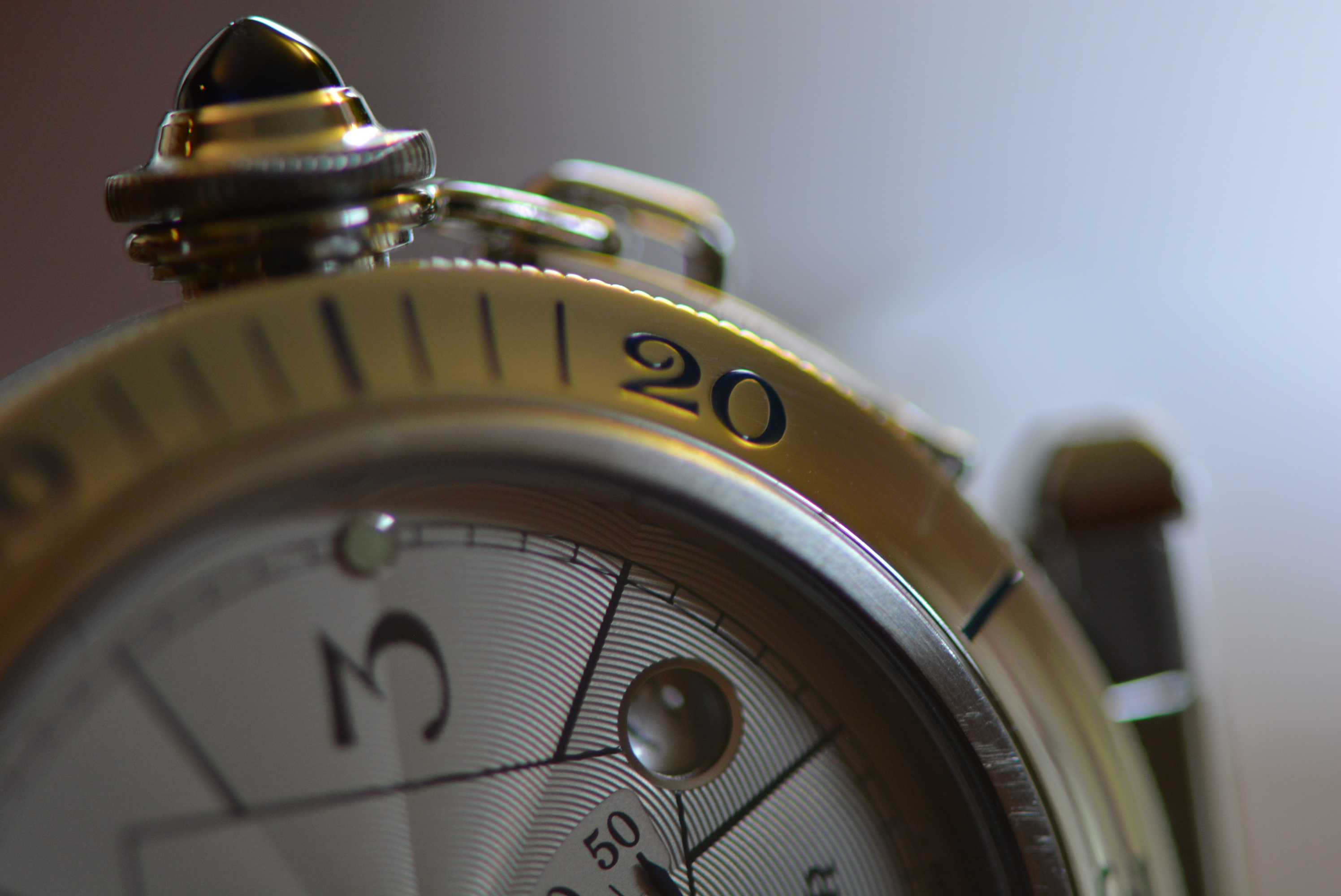
The date introduced al 4 o’clock, out of the overall symmetry, it fits (or coincides) one of the extremes of the drafted “chemin de fer”. To complement the choice, the cyclops is not trivial at all. Modulated as a porthole. In some models squared, in some others rounded with a highly polished border.
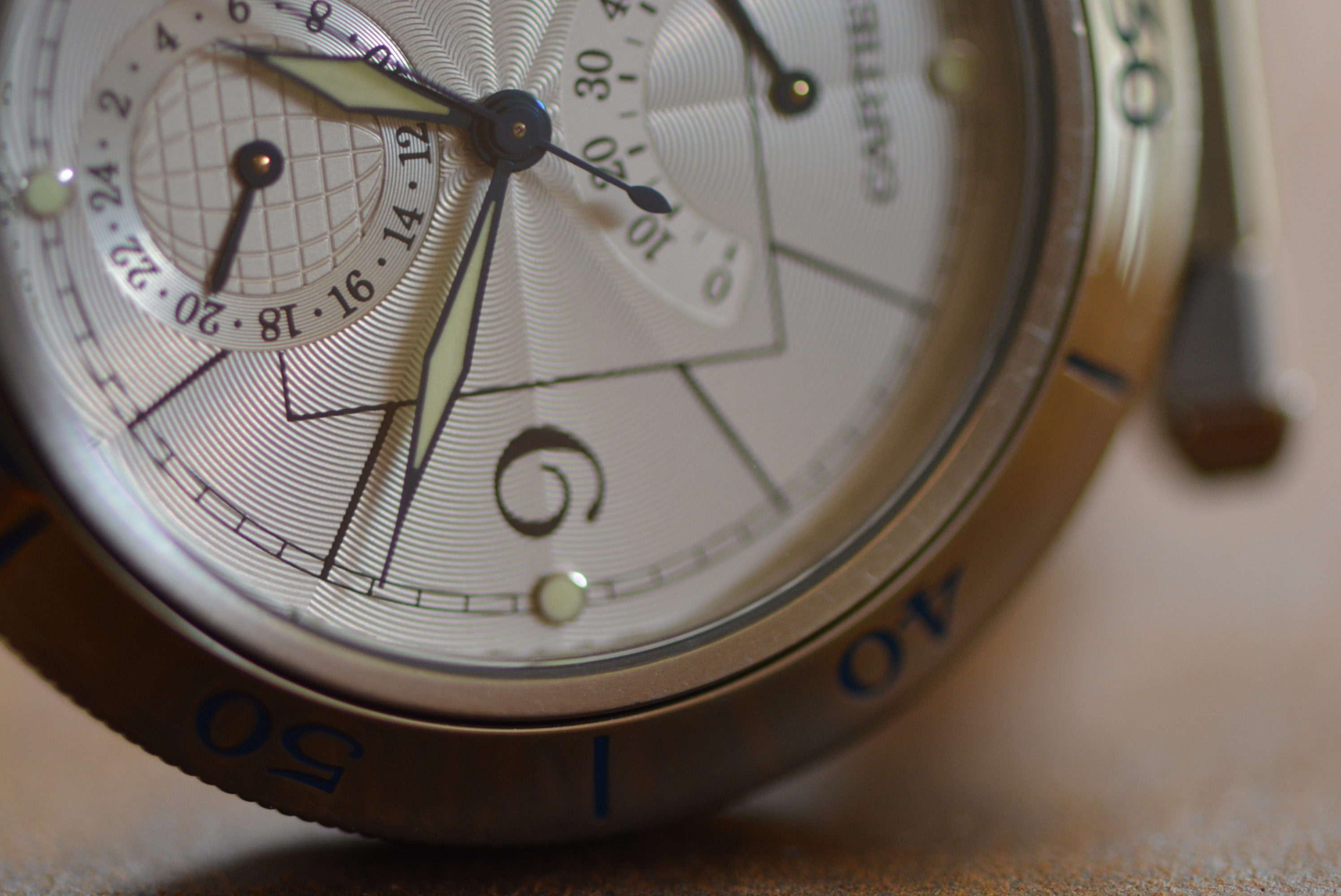
Even the lume of the hands is not unintentional. Light pale green leaves reverberate with the blue hands framework. Reflections and contrasts master its appearance in particular light conditions, making superb the execution and the final aesthetic. A different shape for the hands is then chosen. Different from what we are used to seeing by Cartier. A deformed and sharp leaf hand that rides between a tapered hand and a sword hand. The neck close the pivot point is slender, opening toward th center to close again into a sharp needle. This element is actually a reinterpretation of the original hands used in the model of 1943, even if in this case lumed is applied to exacerbate the darker blue outline of the hand. The pointed end of the minute hand comes close to a needle, so gently and sharply confessing its nature as an arrow, picking at each single marked minute and pierced by such an arrow, within the outer ring of “chemin de fer” where they freely run. An admirable execution that combined all together to give an overall effect difficult to catch at a first glance.
At last, but not least let’s talk about the movement that would deserve a chapter alone. The caliber is a Cal. Girard Perregaux 3100. It is a derivation of a JLC movement.
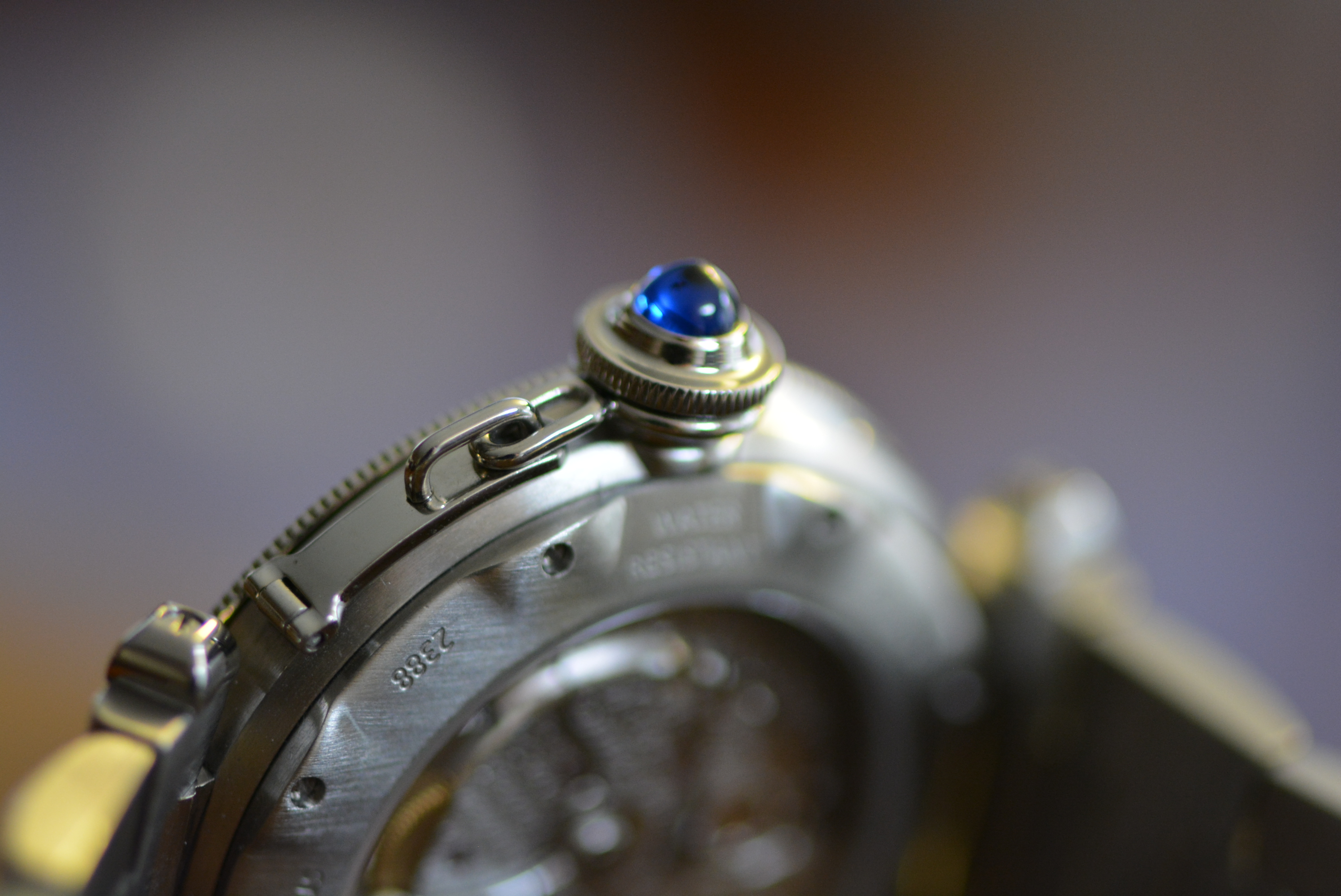
Unfortunately at the time of writing one on my main sources of information about vintage movements is down, nad I am unable to find more information about this caliber. And I don’t recall by memory, other than a few notes I took some time ago. If we compare the amount of complications in this movement to the overal thickness is incredible the level of achievement for such a “standard” offering. Power reserve, date, sweeping central second, GMT sub-dial not independent for the main hour hand. Consider it all, the watch barely reaches a modest 10 mm in thickness, given that the watch also has a glass case back (you can enjoy seeing a Cartier decorated movement).
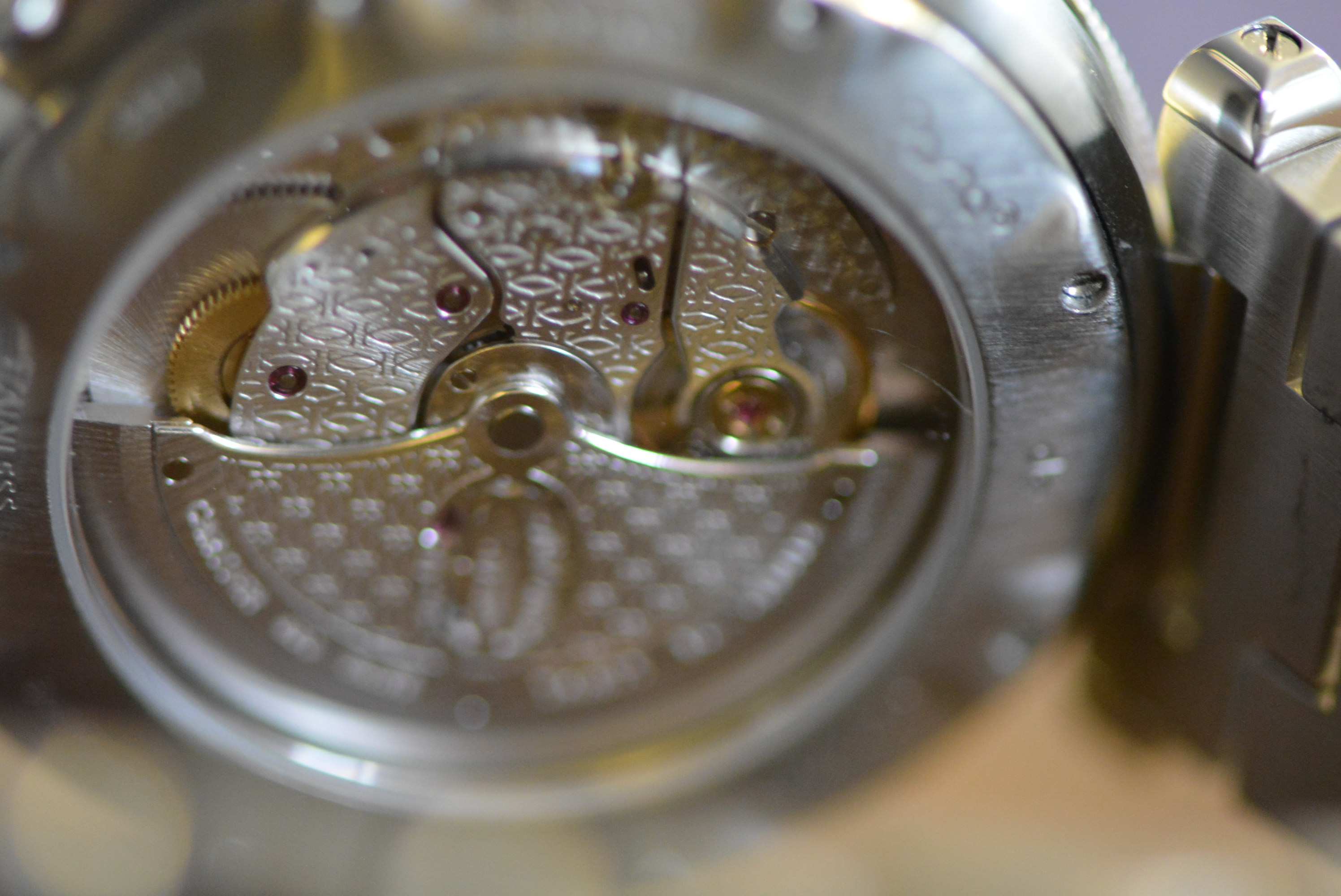
A very slim watch for the offered complication that well proportioned under a not extremely tight wrist shirt.
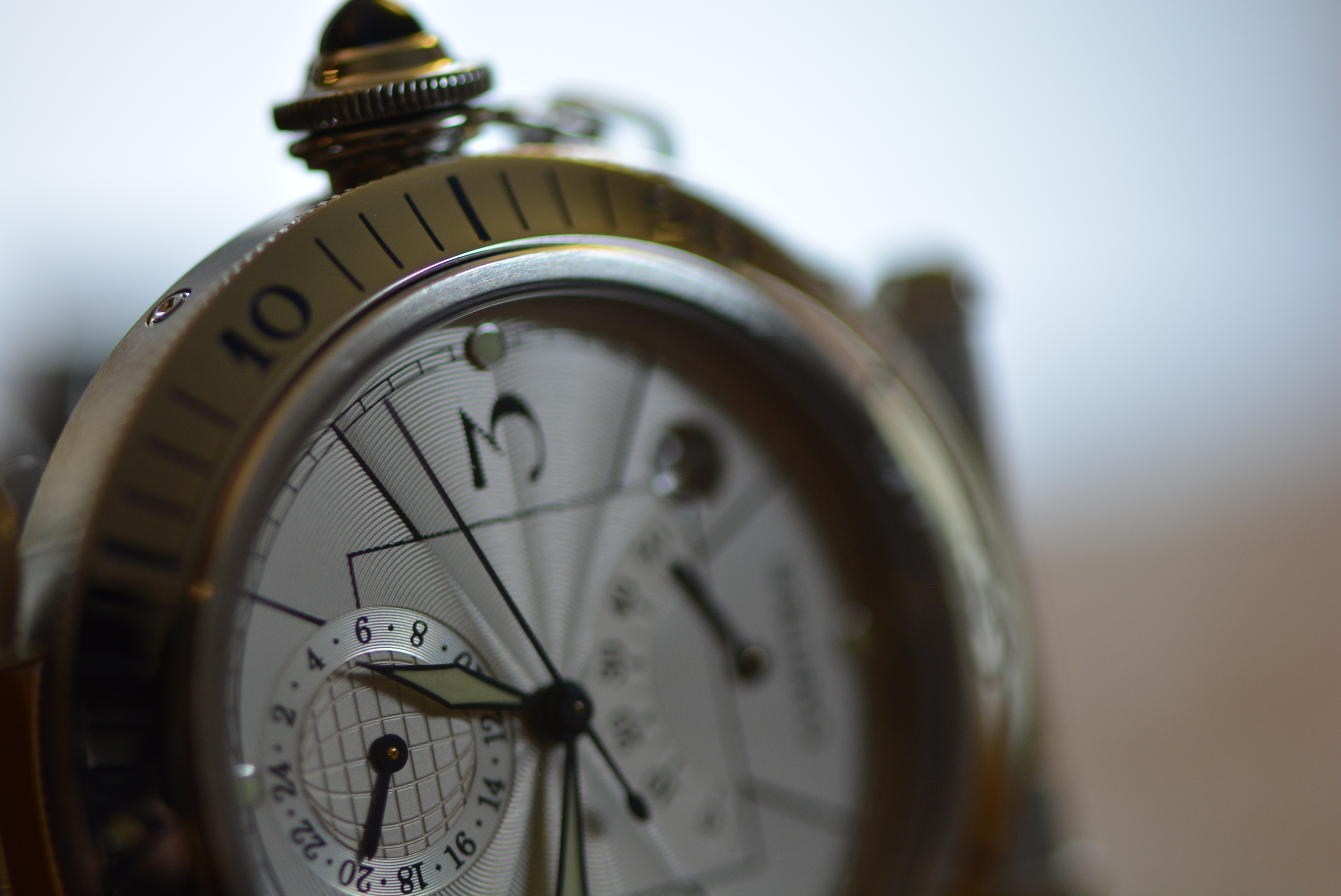
If you haven’t already thought, I love this watch. It contains all I need when I am traveling. Non pretentious, rich in the treatment of the dial, with different guilloche treatment for different subdials or part of the watch, impermeable, with functional compilations, not the last the GMT tracking home time. I adore its symmetry yet its element of disturbance. Its simplicity and complexity. A watch that comes out from a different planet that takes me by surprise every time I take back from my watch roll. Just one defect. If you never wear it and enjoyed a bit, a picture leaves little restitution of the joy it can bring.
By the way, 50 hours reserve in a 38 mm size, packed with complication well represented and distributed does not find any comparison even in today’s offering of Cartier. Without mentioning others more expensive brands.
Just a final curiosity. Did you know that this model has a flat glass, and the small cyclop is inserted inside the dial, under the glass, in the date window, circled by a highly polished ring that give light to the very small aperture. The cyclops is inside, not on the glass. Love it.
History references has been taken from “”Le Temps De Cartier” J. Baracca G. Negretti F. Nencini. 1989.
Lascia un commento